Overview and Philosophy of the Guidebook
Introduction
Today’s workplaces are evolving rapidly, shaped by new expectations, digital transformation, and the growing importance of mental wellbeing. Generation Z, as the newest cohort entering the workforce, brings fresh perspectives, values, and needs that challenge traditional approaches to management and organizational culture.
Digital overload, workplace pressure, uncertainty, and constant social expectations are increasingly affecting young people's mental health, motivation, emotional resilience, and their workplace connection.
At the same time, employers and organizations are struggling to adapt workplace cultures to the evolving needs, expectations, and communication styles of Generation Z.
To address these challenges, the MIND THE GAP Erasmus+ project brings together innovative digital tools and learning resources designed specifically to support the mental wellbeing and resilience of Generation Z in workplace environments.
MIND THE GAP bridges the distance between digital transformation and human wellbeing by providing online training resources promoting resilience and mental health, adapted to the learning preferences and needs of Generation Z.
Overview of the Guidebook
Mental health is no longer just a personal issue — it is a workplace priority. This is particularly relevant for Generation Z, who place a strong emphasis on wellbeing, work-life balance, psychological safety, and meaningful work experiences. Organisations that support wellbeing can foster:
- Healthier teams,
- Higher engagement,
- Stronger resilience,
- Better communication,
- Improved productivity and retention.
This guidebook is designed to support employers and managers in navigating these changes by providing practical strategies, actionable tools, and good practices to create supportive, inclusive, and mentally healthy work environments. By focusing on both organizational structures and everyday management practices, the guide aims to help organizations improve employee wellbeing, strengthen engagement, and build more resilient and productive teams.
Philosophy Behind the Structure of the Guidebook
The guidebook is structured around several interconnected themes that together help employers and managers create a mentally healthy, inclusive, and supportive workplace for Generation Z.
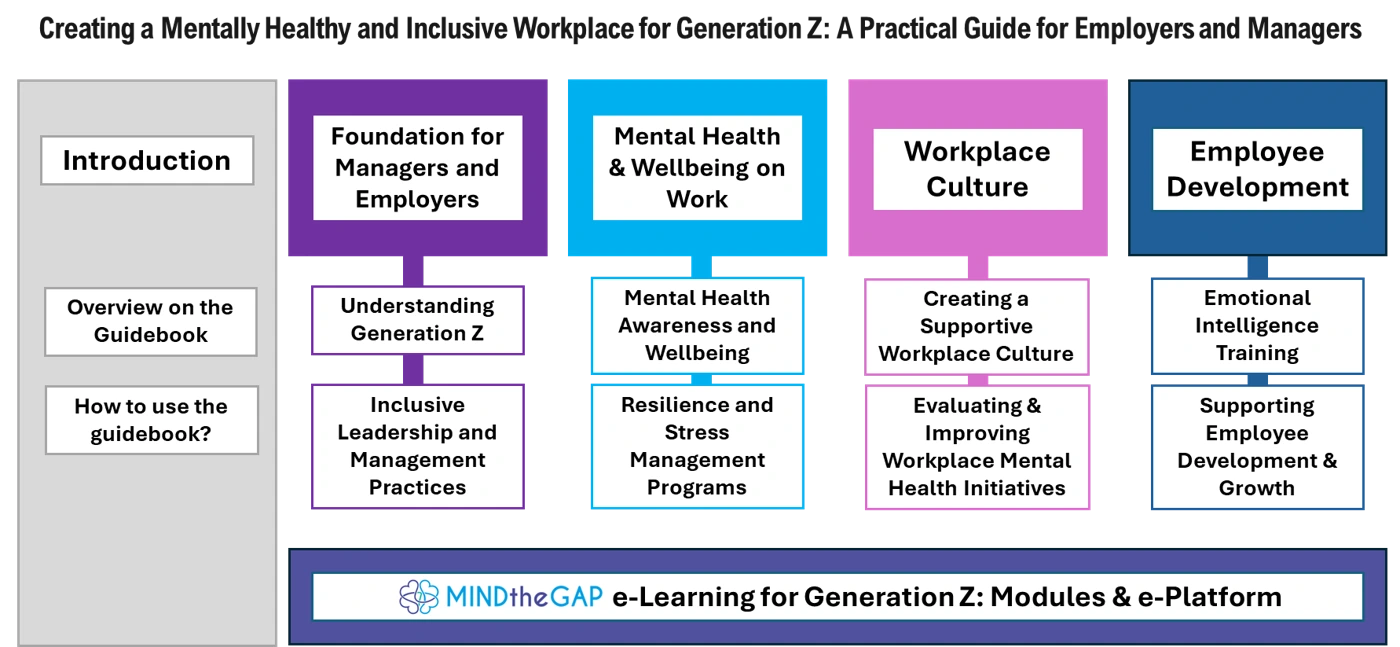
The guidebook starts with the foundation layer: understanding Generation Z and the role of managers in creating supportive workplace environments. Before organizations can design effective wellbeing strategies, managers need to understand the characteristics, expectations, and workplace experiences of the new generation entering the workforce, while also developing inclusive leadership practices that influence trust, communication, and psychological safety.
The structure follows a logical progression: from understanding Generation Z and developing inclusive leadership practices to promoting wellbeing, creating supportive workplace cultures, evaluating impact, and supporting long-term employee development (Figure 1).
“Understanding Generation Z” forms the foundation layer of the guidebook. It provides insights into the values, expectations, motivations, communication styles, and workplace preferences of Generation Z. Understanding these characteristics helps employers and managers adapt their leadership approaches, workplace practices, and wellbeing initiatives more effectively.
“Inclusive Leadership and Management Practices” forms the enabling leadership layer of the guidebook. It focuses on how leaders manage and support their teams through inclusive management practices, effective communication, fairness, trust, and a sense of belonging. Leadership behavior plays a critical role in shaping employee wellbeing and workplace culture.
“Mental Health Awareness and Wellbeing at Work” represents the strategic wellbeing layer. It introduces the overall framework for mental health and wellbeing in the workplace, explains why these topics matter, and outlines the key pillars of a wellbeing strategy. This theme provides the overarching perspective that guides all other actions and initiatives.
“Resilience and Stress Management Programs” is the intervention layer. While the previous theme explains why mental wellbeing matters, this theme focuses on how organizations can actively support it through resilience-building activities, stress management techniques, coping strategies, workshops, and practical recovery tools. It is therefore an implementation-focused topic.
“Creating a Supportive Workplace Culture” represents the culture layer. The focus here is on building an organizational environment characterized by trust, collaboration, inclusion, open communication, and effective support systems. Culture creation is the central subject of this theme.
“Evaluating and Improving Workplace Mental Health Initiatives” forms the measurement and improvement layer. It focuses on monitoring and evaluating workplace initiatives through surveys, feedback mechanisms, key performance indicators (KPIs), and continuous improvement processes. This helps organizations assess impact and ensure that resources are invested effectively.
“Emotional Intelligence Training” represents the capability development layer. It focuses on strengthening individual competencies such as self-awareness, emotional regulation, empathy, communication, and conflict management. These skills support both individual wellbeing and positive workplace relationships.
“Supporting Employee Development and Growth” forms the engagement and growth layer. It focuses on career development, continuous learning, mentoring, feedback, and creating a sense of purpose at work. By supporting employees' professional growth, organizations can increase motivation, engagement, and long-term wellbeing.
Together, these themes provide a comprehensive framework that helps employers and managers understand, support, and respond to the unique needs of Generation Z in the workplace. All eight themes reflect different dimensions of a single organizational ecosystem that supports employee wellbeing, engagement, and performance.
Finally, the MIND THE GAP e-learning training program and online learning platform are presented as complementary resources that support employers and managers in addressing the unique needs of Generation Z and promoting mental wellbeing, resilience, and engagement in the workplace.